
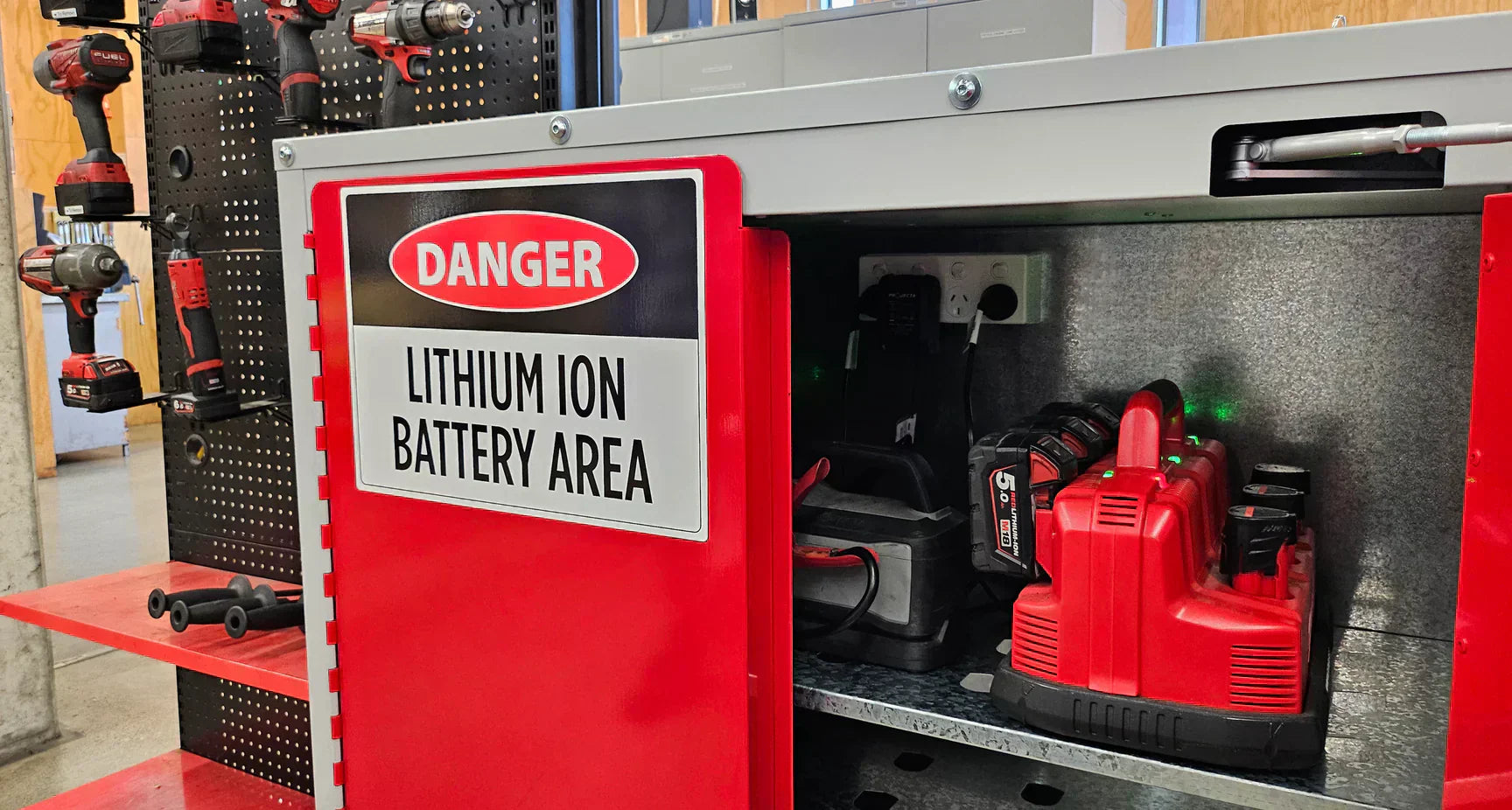
Lithium-ion batteries have become essential to modern life. From smartphones and laptops to power tools, e-bikes and industrial equipment, they power the devices and systems we rely on every day.
While these batteries offer significant advantages in performance and efficiency, they also present unique safety risks that are often underestimated. Understanding these risks is critical for both workplaces and individuals managing lithium-ion batteries at any scale.
What Are Lithium-ion Batteries?
Lithium-ion (Li-ion) batteries are rechargeable energy storage systems known for their high energy density, lightweight design and long cycle life. These characteristics make them ideal for both consumer electronics and commercial applications.
Inside each battery are multiple cells containing flammable electrolytes and reactive materials. While engineered with safety mechanisms, these components can become hazardous if the battery is damaged, improperly used or exposed to unsuitable conditions.
Why Lithium-ion Batteries Present a Risk
Under normal conditions, lithium-ion batteries are safe and reliable. However, when compromised, they can fail rapidly and with significant consequences.
WorkSafe notes that misuse, overcharging, or poor-quality components can lead to fire, explosion and toxic smoke hazards.
The key risk factors include:
Thermal Runaway
Thermal runaway is the most critical hazard associated with lithium-ion batteries. It is a chain reaction where heat generated within a cell triggers further reactions, causing temperatures to escalate uncontrollably.
This can result in fire, explosion, or the release of toxic gases, and can spread quickly from one cell to another.
Mechanical Damage
Physical damage such as crushing, puncturing or dropping a battery can compromise internal structures, leading to internal short circuits and instability.
Electrical Misuse
Overcharging, using incorrect chargers, or exposing batteries to electrical faults can increase internal pressure and temperature, significantly raising the risk of failure.
Manufacturing Defects
Poor-quality or counterfeit batteries may lack proper safety controls, making them more susceptible to overheating and failure.
The Nature of Lithium-ion Battery Fires
Lithium-ion battery fires behave differently from conventional fires and present unique challenges.
- They can ignite rapidly and without warning
- Fires burn at extremely high temperatures
- They are difficult to extinguish and may reignite
- They release toxic and flammable gases
Once a battery enters failure, the event can escalate within seconds, leaving very little time to respond effectively.
Where Lithium-ion Batteries Are Commonly Found
Lithium-ion batteries are now present across nearly every environment, including:
- Mobile phones and tablets
- Laptops and cameras
- Power tools and garden equipment
- E-bikes, scooters and electric vehicles
- Industrial equipment and backup power systems
Their widespread use increases the likelihood of risk exposure, particularly in workplaces where multiple batteries are stored, charged or transported together.
Warning Signs of Battery Failure
Early identification of a failing battery can prevent a serious incident. Warning signs include:
- Excessive heat during use or charging
- Swelling, deformation or leakage
- Unusual odours or noises
- Discolouration or visible damage
If any of these signs are present, the battery should be removed from service immediately and isolated from combustible materials.
Best Practice for Safe Use and Storage
While risks cannot be eliminated entirely, they can be significantly reduced through proper handling and storage.
Key safety practices include:
- Use only manufacturer-approved batteries and chargers
- Avoid overcharging or leaving batteries unattended while charging
- Store batteries in cool, dry environments away from direct sunlight
- Prevent contact with metal objects to avoid short circuits
- Do not use or charge damaged batteries
For workplaces, these measures should be supported by clear procedures, staff training and appropriate safety infrastructure.
The Importance of Proper Storage
As lithium-ion battery use increases, so does the need for controlled storage environments.
Improper storage can allow small failures to escalate into major incidents, particularly where multiple batteries are stored together. Purpose-built storage solutions help to:
- Isolate batteries from surrounding materials
- Contain potential fire events
- Manage heat and gas release
- Provide critical time for evacuation and emergency response
This is particularly important in commercial and industrial environments where the consequences of a battery fire can be severe.
Final Thoughts
Lithium-ion batteries are a powerful and necessary technology, but they must be treated with respect. The risks associated with thermal runaway, fire and toxic emissions are real and increasing as adoption grows.
By understanding how these batteries fail and implementing appropriate safety measures, businesses and individuals can significantly reduce risk and create safer environments.
Effective battery safety is not just about compliance. It is about protecting people, property and operations from a rapidly evolving hazard.
Share:
Lithium-ion Battery Storage: Practical Safety Solutions for Every Environment